Small modifications making existing equipment work closer to intention
Role: Designer / Prototyper
Scope: practical accessibility adaptations for daily home use
Methods: close observation, prototyping, real-use testing, and adjustment over time
These projects come from ongoing practical accessibility work with a private client, where the design problem is usually not a single object but a repeated frustration in daily life. The work often starts by watching where an existing tool, chair, attachment, or routine almost works, then modifying it until it becomes easier to use, easier to explain, or less physically frustrating. Most of the solutions are intentionally practical: mounts, tension systems, clearer panels, small jigs, material substitutions, and off-the-shelf parts adapted around real use.
Robot Arm
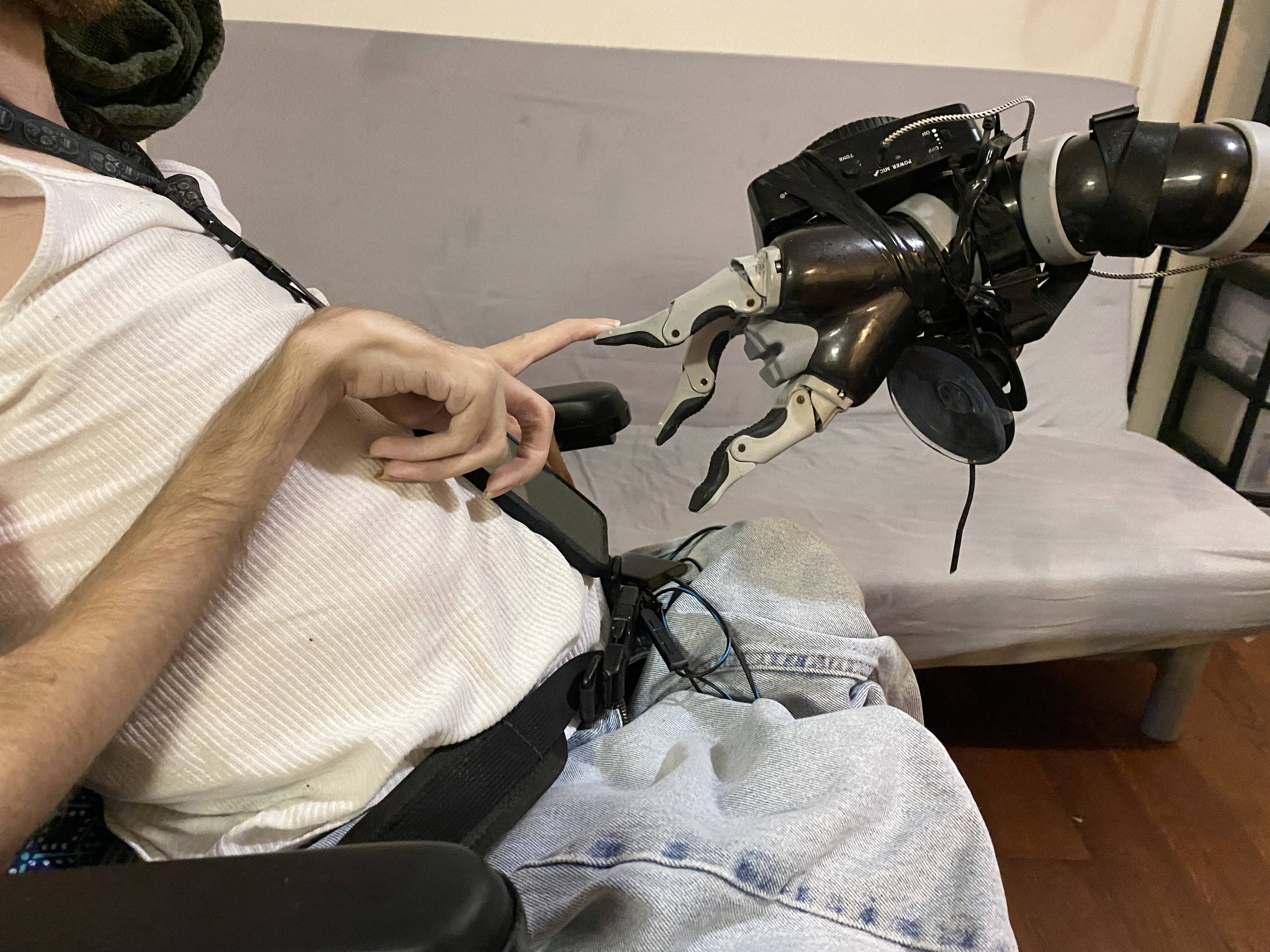
Limited mobility makes the chair-mounted robotic arm one of the client’s main ways of interacting with the world. These adaptations expand what the existing arm can hold and support, rather than replacing the equipment or treating the problem as a brand-new device.
A motorcycle camera mount lets the arm hold a digital camera for photography and artistic expression. A compact microphone/speaker setup supports conversation in public spaces; careful cable routing lets the system move with the arm instead of snagging or limiting its range.
That communication piece matters because limited vocal projection can turn ordinary public interactions into repeated requests to speak louder or say things again. The speaker setup addresses that social barrier, not just audio volume. Together, the attachments make the arm more useful in the places where it already matters: making photographs, communicating with people, and getting out of the house with less friction.
“All-weather” Pod
An off-the-shelf weather pod allowed the client to use a power chair in rain or cold weather, but the factory setup created new problems. The soft front plastic rippled and produced glare, making it difficult to see through. That visibility problem matters especially because limited head movement make it much harder to compensate for the glare by shifting position.
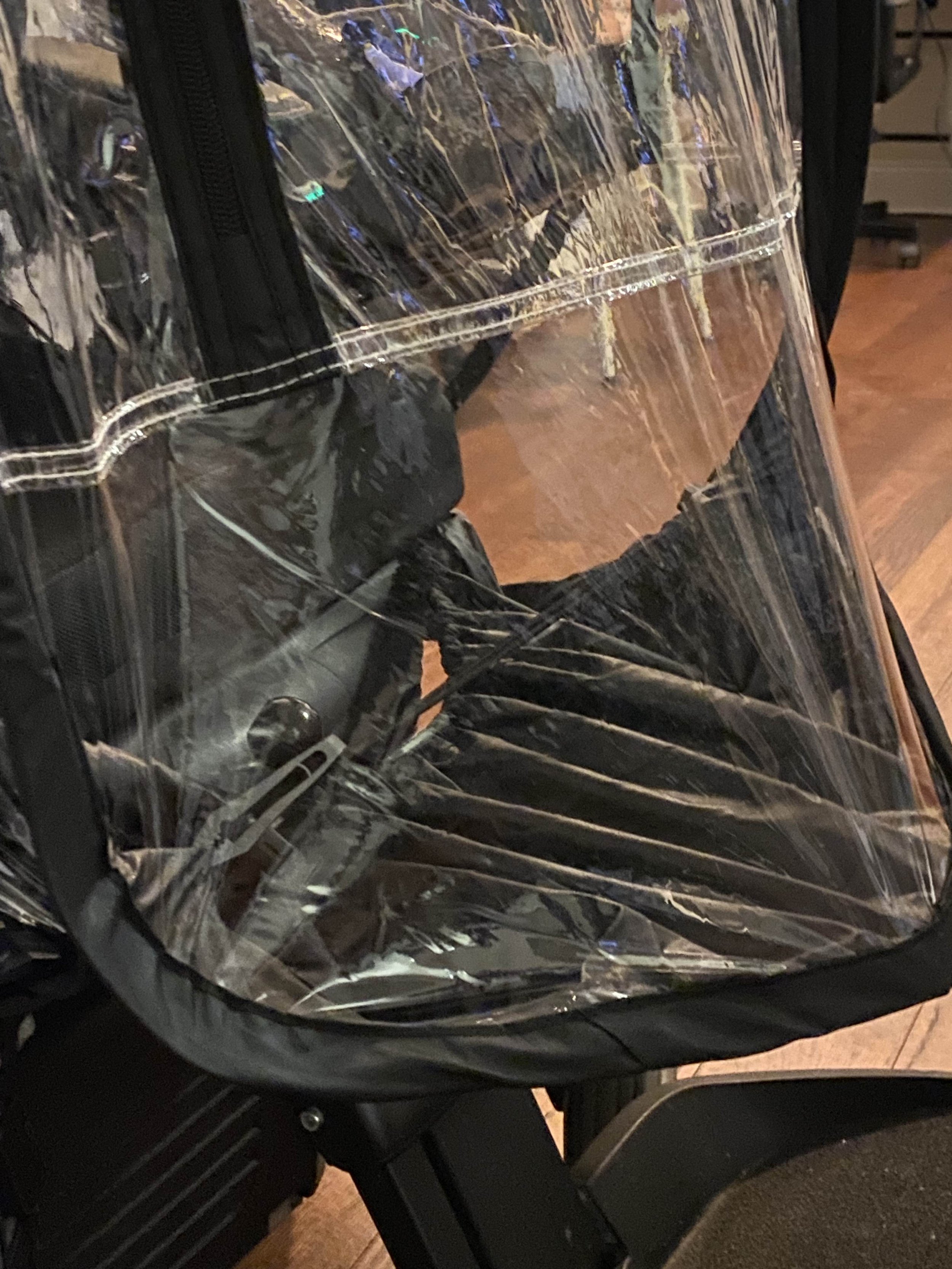
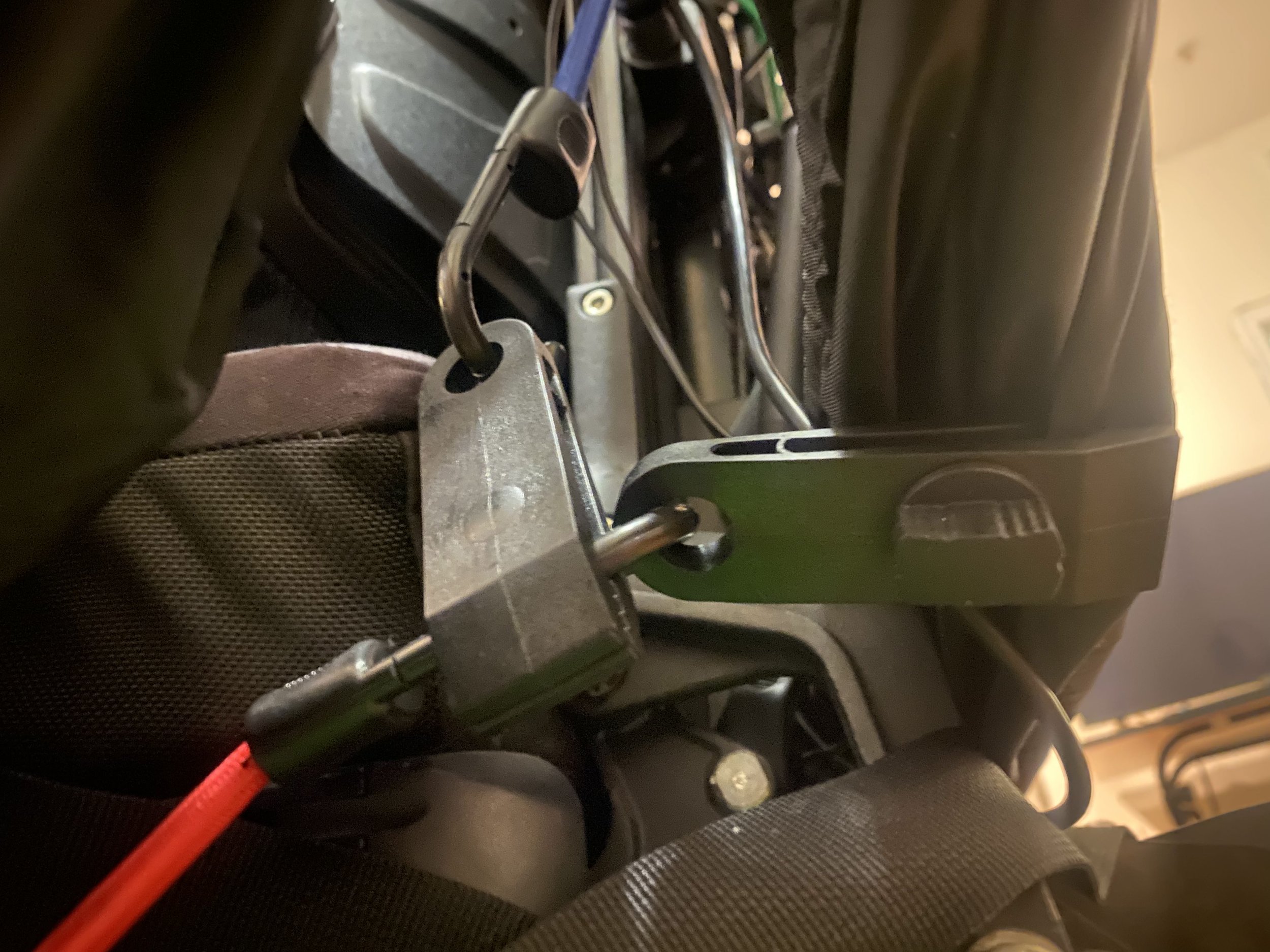
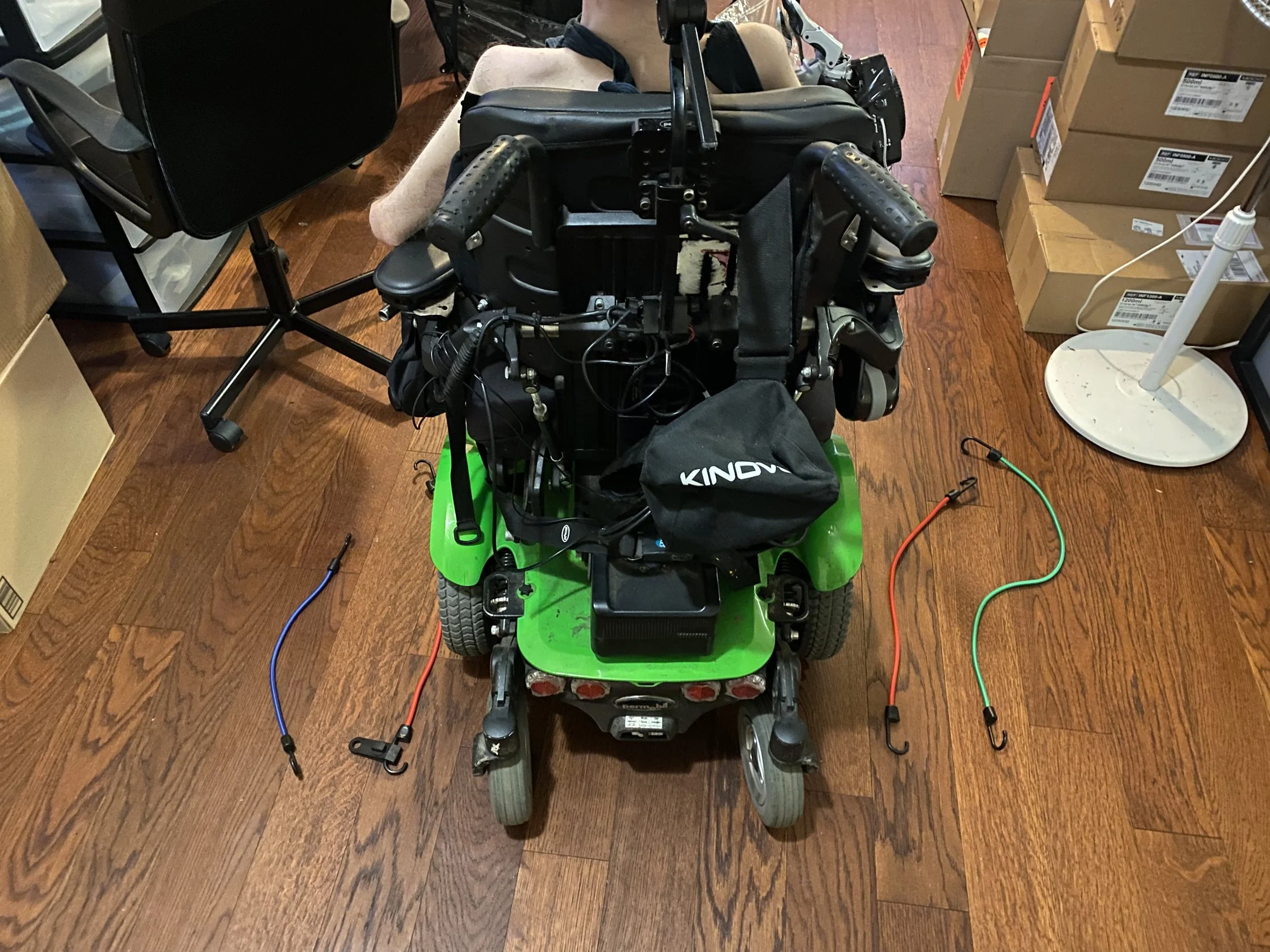
Replaced the front zipper panel with a clear piece of heavy polystyrene to reduce glare and improve visibility. Used color-coded bungee cords and tarp clips to attach the pod to the chair under tension, so it could lightly float instead of resting on the user’s legs. The tensioned setup also helped the pod stay in place at higher chair speeds or in gusts of wind. Added a taper to the front using bent structural wire and bungee tension, which helped keep the front panel flatter while reducing glare and wind resistance. The color coding gave health aides a repeatable setup to follow.
Passive Counter-force
Used nitinol wire and sports tape/bands to create a counterforce system for both arms, resisting passive disability driven muscle traction that had made everyday reaching and manual interaction more difficult and painful.
Created a rougher secondary setup from leftover bungees to support passive stretching with more force, separate from the nitinol-assisted neutral positioning system.
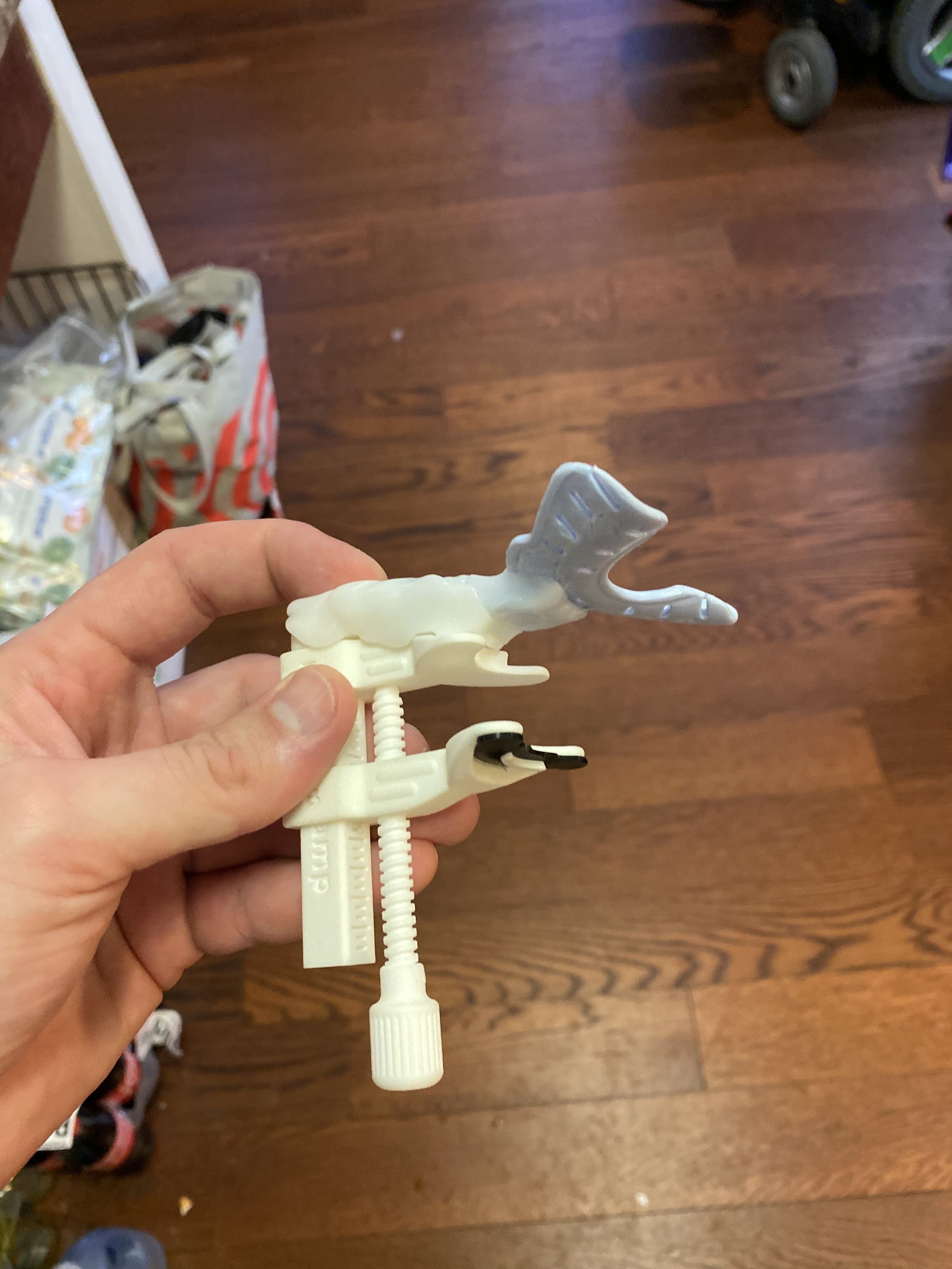
Jaw Stretching
A rudimentary way to allow client to use a custom jaw stretcher that even at its smallest setting could not fit between their teeth. Originally it could fit, but was painful - and due to not using the stretching tool this progressed to being unable to use the tool at all. Using moldable polycaprolactone & standard thermoplastic mouth pieces, created a way to get the tool to fit correctly.